← Return to Archive
Notes From the Severed Floor /
005
Document No.
NFTO-002
Filed
May 13, 2026
Author
K. Dabir (Outtie)
Department
Notes From the Outside / 002
Read Time
17 minutes
Classification
Personal
Notes /
005
Notes From the Outside / 002

Jason Collins Opened a Door the NBA Never Walked Through. The WNBA Built a House.
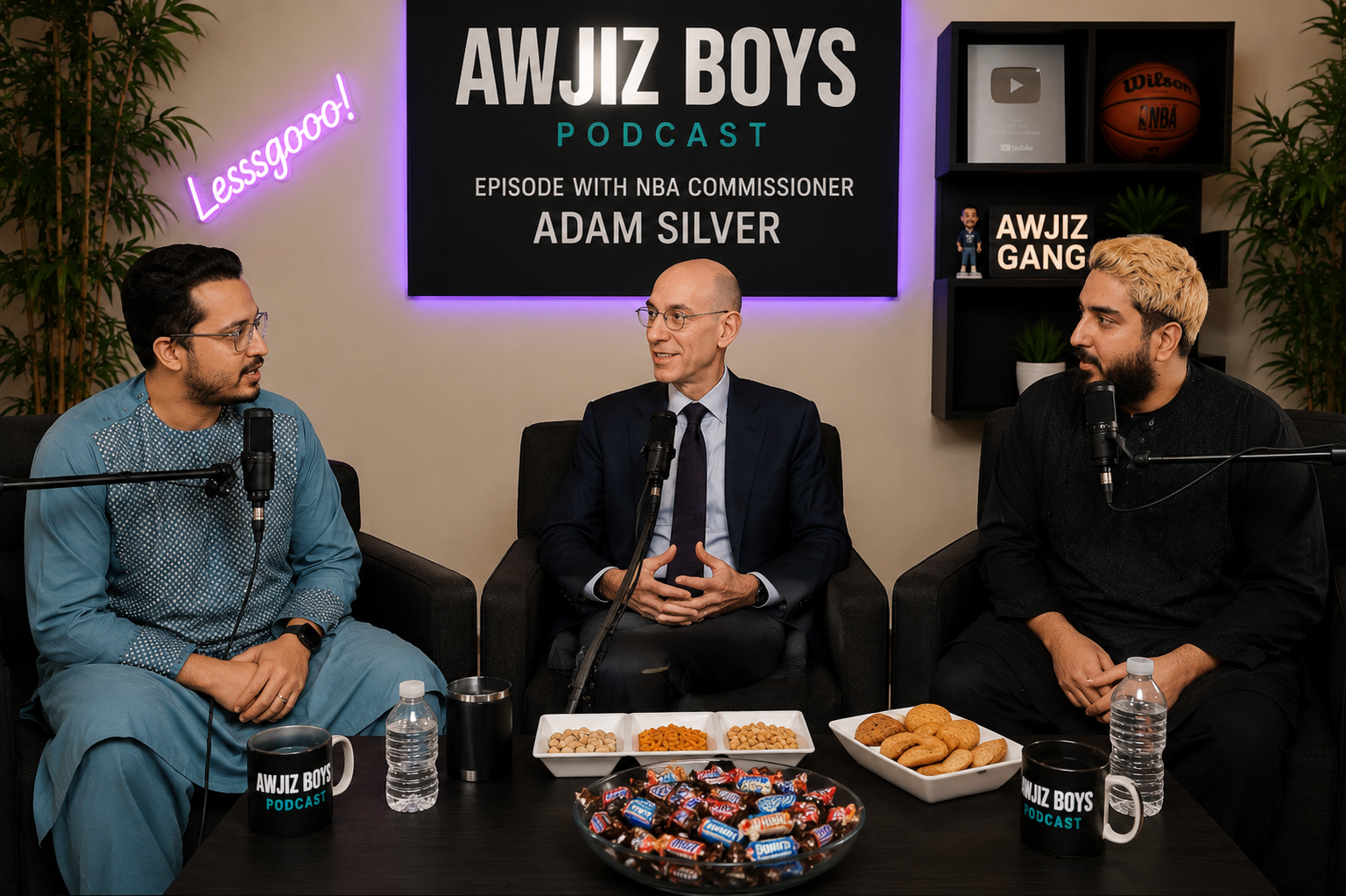
This is the kind of news everyone knew was coming and nobody was ready for. Jason Collins died on Tuesday, May 12, 2026, at age 47, from glioblastoma. His husband Brunson Green and his family announced it through the NBA. He had disclosed his diagnosis publicly in late 2025 and fought it for roughly eight months, including experimental treatments in Singapore that were effective enough to bring him home in time to attend NBA All-Star Weekend events in Los Angeles and one final game at his alma mater, Stanford. He is survived by Brunson, his twin brother Jarron, and a sports world that owes him more than it has fully reckoned with.
This post is two things at once. It is a tribute to Jason. And it is a question the NBA has been allowed to avoid for twelve years that I don't think we should let it avoid anymore. We can do both.
Who He Actually Was
Jason Collins was a 7 foot center who spent thirteen years in the league. Houston Rockets first round, 18th overall pick, 2001 NBA Draft. Traded to the New Jersey Nets on draft night. He helped that Nets team reach back to back NBA Finals in 2002 and 2003 alongside Jason Kidd and Richard Jefferson. He went on to play for the Grizzlies, Timberwolves, Hawks, Celtics, and Wizards before finishing his career with the Brooklyn Nets in 2014. He was never an All Star. He was a defender. He set picks. He rebounded. He did the things that don't make highlight reels. Coaches loved him. Teammates loved him. He was the kind of professional every locker room needs and almost none acknowledge until they're gone.
He grew up in Northridge with his identical twin Jarron. Both of them went to Harvard Westlake, both of them went to Stanford, both of them played in the NBA. Jason still holds the Stanford career field goal percentage record, almost 61 percent. He was an honorable mention All American in 2001. The kind of résumé that gets you in the door of the league and quietly keeps you in it for over a decade.
And then on April 29, 2013, in a first person essay published in Sports Illustrated, he wrote one of the most consequential opening lines in American sports history.
I'm a 34 year old NBA center. I'm Black. And I'm gay.
That single sentence broke something open the league had been pretending wasn't locked. The next morning, he sat down with George Stephanopoulos for his first on camera interview about the essay. You can watch the moment he says it out loud below. The look on his face is the look of a man who has just put down something he has been carrying his entire life.
What April 29, 2013 Actually Meant
He was the first active openly gay player in any of the four major North American men's professional sports leagues. The NBA, the NFL, MLB, the NHL. Tens of thousands of athletes across all of those leagues, across decades of professional sport, and not one of them had ever said those words out loud while still in uniform. Jason did it first.
The reaction was bigger than he could have prepared for. Barack Obama called him personally. Steve Nash posted "maximum respect." Oprah called. The Human Rights Campaign called him a legend. Even Tim Hardaway, who had once said on the radio that he hated gay people, called Jason to apologize and offer support.
A free agent at the time of the essay, Jason did not get signed for the rest of that season. Some people noticed. Most didn't. Then, in February 2014, the Brooklyn Nets signed him to a 10 day contract. His former Nets teammate Jason Kidd, by then Brooklyn's head coach, lobbied for him. Jason took the floor against the Lakers at Staples Center wearing number 98, the year Matthew Shepard was murdered in Wyoming for being gay. The 10 day contract became another. Then a season ending deal. He played 22 games for the Nets, retired at the end of the season, and walked into the next decade of his life as an NBA Cares Ambassador. He spent the next twelve years showing up for kids, for players coming behind him, for any high schooler in Iowa or Texas or rural Pennsylvania who needed to know that a 7 foot Black gay man had done it first and survived.
He left this world married to Brunson Green. He left it loved. He left it with his work mostly done.
But not finished. Because here is the part the league has not wanted to look at.
Twelve Years. Zero Players. Do the Math.
There are roughly 450 active players in the NBA in any given season. Across 30 teams, with 15 roster spots each. The Williams Institute at UCLA, which is the most rigorous demographic research center on LGBTQ+ identity in the country, estimates somewhere between 7 and 9 percent of US adults now identify as LGBTQ+. Among Gen Z adults specifically, Gallup has tracked that number crossing 20 percent in their most recent survey waves.
Take the conservative end. Seven percent of 450 NBA players is 31. That is roughly the number of openly gay or bisexual men we would expect to be playing in the league right now based on national demographics. Probably more, because we know LGBTQ+ identification is higher among younger adults and the NBA workforce skews young.
The actual number of openly gay or bisexual active NBA players, twelve years after Jason Collins came out: zero.
Not one. In over a decade, with 450 active players per season and a turnover rate that means thousands of men have passed through the league since 2013, not a single one has followed Jason through the door he opened. The math is screaming at us. The silence is doing something.
Jason himself was asked this question directly in 2025 by Uncloseted Media's Spencer Macnaughton in an interview titled, plainly, "Twelve Years Later, Jason Collins Is Still the Only NBA Player to Come Out. Why?" Jason's answer, in essence, was that the next person needs a plan and a support system before they make the announcement. He was right. He was also describing a problem with an institutional fix, not just a personal one.
The League That Built a House
Now look across the hallway.
The WNBA has roughly 144 active players across 12 teams. Apply the same demographic math and you would expect somewhere around 10 to 13 openly LGBTQ+ players. The actual visible number is dramatically, multiplicatively higher. Brittney Griner is married to her wife Cherelle and has been public about it for most of her career. Sue Bird and Megan Rapinoe are one of the most visible same sex sports couples in the country. Diana Taurasi is married to Penny Taylor. Layshia Clarendon, the first openly non binary and trans athlete in the W, plays without anyone in the league treating it as a problem to be managed. Sophie Cunningham. Courtney Vandersloot. Allie Quigley. The list is too long for one paragraph.
It is not that the WNBA happens to have more LGBTQ+ players than the NBA. It is that the WNBA built a league that does not require its players to lie in order to be employed.
The marketing reflects it. The Pride campaigns are not afterthoughts run by a CSR department, they are core programming. The fanbase reflects it, with a queer fan demographic that has been one of the league's most loyal audience segments since the league's first season. The player advocacy infrastructure reflects it, with veterans actively mentoring rookies on how to navigate visibility on and off the court. When Brittney Griner was detained in Russia, the entire league mobilized around her not despite her being a gay Black woman but because of it. That solidarity is structural. It is not personality driven.
That is what it looks like when a league decides the people in its uniforms are allowed to be the people they actually are.
So Why the Gap
There is no honest argument that the difference between 0 openly gay players in the NBA and double digits in the WNBA is a coincidence of who happens to play professional basketball. Gay men exist in roughly the same percentages as gay women. The difference is the locker room. The difference is the league office. The difference is the sponsors. The difference is the fan base. The difference is the religious institutions that the majority of NBA players in the United States were raised inside of. The difference is what a 22 year old draft pick believes will happen to his endorsement portfolio, his social media mentions, his family at Thanksgiving, his life, if he comes out.
That stack of fears is not paranoia. Those fears are real. They have been engineered. They are the load bearing walls of a culture that has never been pressured to come down.
Comedy doesn't bother people. Gay men in masculine spaces bother people. Specifically gay men in masculine spaces who don't ask for the room's permission first.
I wrote a version of that line a few weeks ago about something else. It applies here too. The pattern is structural.
The Nonsecular Problem Nobody Wants to Name
Here is the part nobody wants to type out loud. The biggest single force keeping the NBA's closet closed is religion. Not Islam, although the AwJiz Boys audience knows my critique there too. Not Judaism. Not any one tradition. The version of American religious culture, and frankly global religious culture, that has decided being gay is a sin remains the most powerful single suppressant of LGBTQ+ openness in professional sports.
And the thing nobody in those religious spaces wants to address is that the case against being gay has never actually made sense.
It is not contagious. It is not chosen. It is not curable. It is not a phase. There is no praying it away, there is no scared straight intervention, there is no "if we don't show it on TV the kids won't know it exists" containment that works. The kids know it exists because the kids know themselves. That is how this has always worked.
Speaking only for me, I am a straight man with a lot of gay people in my life and on my podcast. I have never, not once, encountered a moment so gay that it shifted my preferences. Because that is not how preferences work. The same way no amount of straight presentation has ever convinced a gay person to stop being gay. The whole framing assumes humans are programmable and that gay men in particular are some kind of social virus that needs to be quarantined. None of that is true. None of it has ever been true. The receipts on this question have been in for twenty years and the people most committed to the old position keep refusing to read them.
I love gay people. They are some of the most stylish, funniest, most generous, most talented people I have met. Beautiful men who prefer the company of men means less competition for the rest of us, which mathematically should make every straight guy a supporter of Pride month. The logic is not complicated.
And yet here we are, twelve years after Jason Collins, with thirty NBA teams full of men who cannot afford to say what an unknown but statistically real number of them know about themselves.
We Booked Pashmon, and the Diaspora Lost Their Minds
The mechanism is not unique to the NBA.
A few weeks ago on the AwJiz Boys, my co host Dauood and I had Pashmon Azadzoi on, the first openly gay Afghan to be cast on a major US reality show, Netflix's Selling the OC. The conversation was funny, layered, honest. He talked about being gay and Afghan and what that has cost him and what it has given him.
Two clips from that conversation that hit hardest.
The first one is Pashmon talking about why he still cannot be fully open with his family, which is a thing every queer Afghan I have ever talked to has lived in some version of. The cultural weight of disappointing your parents is its own genre of trauma. Watch how he talks about it.
The second one is the moment Pashmon describes when he first realized he was gay. I think anyone from any culture can hear something in this one. It is the most universal thing about coming out stories, the moment of recognition, told by someone who lived it inside an Afghan immigrant household.
The reaction online from parts of the Afghan diaspora was not a thoughtful disagreement. It was the same playbook American conservative Christian spaces have run on the NBA for fifty years, copy and pasted into Dari and Urdu. We were embarrassing the culture. We were corrupting the youth. We were not real Afghans for platforming him. He was not a real Afghan for existing.
Different culture, different language, same mechanism. Hyper masculine traditional space, anchored to a religious framework, treating queer visibility as a contamination event rather than just a fact about the human beings inside the room. The argument was never about content. It was about who got the microphone.
That is what is happening in NBA locker rooms too. The microphone is structurally closed.
The full Pashmon episode and the rest of the clips live on the AwJiz Boys YouTube and TikTok. The ones that traveled the furthest were the ones the diaspora trolls hated the most. Make of that what you will.
Millennials Said Dumb Shit. We Mostly Did the Work.
I have to be honest about my own generation. We were not always good at this.
We used "that's gay" and "no homo" as junk filler in our sentences for half of high school. We laughed at jokes that today's nineteen year olds would walk out of a comedy club over. We used slurs that we now flinch hearing, and we said them with the false confidence that comes from being twenty and convinced you've figured out the rules. Some of us were worse than others. None of us were innocent. I am not going to pretend I was.
Here is a specific receipt from 2013, because that year is the right year for this conversation. The MTV Video Music Awards paired ASAP Rocky and Jason Collins on stage to introduce Macklemore performing "Same Love," a song about gay equality. Collins did his piece on standing up for what you believe in. ASAP Rocky followed it by gesturing at Collins and saying the next artist stands up for everybody being equal, "color... homosexuality." The room laughed in a way nobody felt great about. ASAP apologized later in interviews, calling Jason the Frank Ocean of the NBA, which was its own kind of correction. The moment is in the tape forever.
That clip is a millennial generation x-ray. We were trying. We were not yet good at it. We had Jason Collins on stage in 2013 doing something genuinely brave, and we had ASAP Rocky next to him fumbling the introduction. That is the whole millennial decade in 90 seconds.
But here is what I will give the millennial generation credit for, and I think this is the honest read on the record. We came around. The same generation that grew up calling things gay as a synonym for bad ended up legalizing gay marriage, voting in record numbers for openly queer politicians, hiring gay creators, marrying our gay friends and standing at their weddings, and producing a media landscape where being out is the default and the closet is the exception. We did the actual work even when our language was lagging behind our values.
The credit for that work belongs to a lot of people. To the gay men and lesbians of the generation above us who made the path. To the trans activists who were doing the work decades before the rest of the culture caught up, and who are now where gay folks were fifteen years ago, getting hit with the exact same arguments, the exact same fear, the exact same religious objections that the rest of us already saw fail in real time. To Jason Collins, who used his career as the lever it could be. To everyone who came out before it was safe so that everyone after them came out when it was. We benefitted from their fight. We owe them the rest of it.
Gen Z, You're Cooking
Gen Z is what happens when a generation grows up after the cultural fight has been largely won at the legal level and is now deciding what to do with the win.
What I see them doing, and I am a fan of it, is dismantling the whole idea that sexuality and gender are supposed to fit into the boxes the rest of us were handed. They are queerer, they are more fluid, they are less interested in coming out as a single declarative event because they have decided the declarative event is itself the cage. The reported numbers back this up. Over 20 percent of Gen Z adults identify as LGBTQ+, with the largest share of that growth coming from bisexual, pansexual, queer, and asexual identification rather than from any single category surging.
Everyone cool is gay, or queer, or bi, or ace, or none of the above, or all of the above on different days. That is the read. They are not the broken generation, they are the unblocked generation. They got the version of the conversation that was not designed to keep them small.
Are some of them annoying online? Yes. Will some of them post things in 2026 that they will cringe at in 2036? Of course they will. Every generation does. That is how generations work. Does that change the fact that they are correctly identifying injustices the rest of us were trained to look past? It does not.
Gen Z, you're cooking. Keep cooking. Keep calling out the things that need to be called out. Keep pushing the doors that need to be pushed. We will catch up where we lag and we will get out of the way where we should.
What the NBA Owes Jason Now
Adam Silver put out a kind statement today. So did half of basketball Twitter. The Human Rights Campaign called Jason a legend. His agent Arn Tellem called him a beacon for tolerance, dignity, respect, inclusion, compassion, and understanding. All of it is true.
None of it is enough.
The thing the league actually owes Jason Collins, and I think he would say this himself if he could, is not another statement. It is to do the work that makes his coming out not the last one. It is to be the league where the next openly gay active player does not have to be a curiosity, a headline, a hero, a target. It is to be the league where he can just be a guy who plays in the NBA. The work to get there is structural. Sponsorship policy. Player health and safety infrastructure. Counter messaging when the predictable backlash arrives. Building the same kind of culture the WNBA has been building since 1997. None of it is hard if the league actually wants to do it. All of it is hard if the league does not.
Twelve years is a long time to leave a door open and have nobody walk through it. Jason did the hardest part of the job. The rest of the job belongs to the people he leaves behind.
One More Thing
Jason Collins came out in 2013. I was a different person in 2013. The country was a different country. The NBA was a different league. Millennials were saying dumb shit on Twitter and not yet entirely sure what we were going to grow up to be. A lot of us grew up because Jason had the courage to be honest in public before the rest of us were honest in private. That is what trailblazers do. They go first so the rest of us can be normal.
Rest well, brother. Brunson, we are with you. Jarron, we are with you. The family, the league, the kids who will come out next year because Jason came out first, all of us are with you.
Millennials walked so y'all can fly. Like fairies. With our blessing. Because the word means something different now and that is also part of what Jason and the people like him did. They moved the word.
Let's get Luchak with the AwJiz Boys. The camel sends his love. 🐫
Sources and Further Reading
We do not make claims without receipts. Everything in this post is backed by the following.
On Jason Collins's passing, May 12, 2026
- NBA.com official statement from Commissioner Adam Silver and the Collins family.
- ESPN coverage of his passing and career.
- CNN coverage including statement from the Human Rights Campaign.
- Washington Post obituary.
- NBC News coverage with Adam Silver statement in full.
On his 2013 coming out
- Sports Illustrated original essay, "Why NBA center Jason Collins is coming out now," May 6, 2013 issue, published online April 29, 2013.
- Good Morning America interview with George Stephanopoulos, April 30, 2013 (embedded in this post).
On the twelve year question
- "Twelve Years Later, Jason Collins Is Still the Only NBA Player to Come Out. Why?" by Spencer Macnaughton, Uncloseted Media, April 2025. This is the closest thing to the conversation Jason was having about the structural problem before he died, and his answers in it informed several paragraphs of this post.
On the demographic math
- The Williams Institute at UCLA School of Law, the most cited research institution on LGBTQ+ demographics in the United States.
- Gallup polling on Gen Z LGBTQ+ identification, which has tracked the number crossing 20 percent in their most recent adult survey waves.
On the WNBA
- Player biographies and public profiles for Brittney Griner, Sue Bird, Diana Taurasi, Layshia Clarendon, Sophie Cunningham, Courtney Vandersloot, and Allie Quigley are publicly documented across ESPN, The Athletic, and Sports Illustrated. The structural argument about WNBA culture draws from over two decades of league marketing decisions, player advocacy programs, and fan demographic research.
On the 2013 MTV VMAs moment
- Footage embedded in this post. Reaction coverage from Vibe, Michigan Chronicle, and others, August through September 2013. ASAP Rocky publicly apologized in subsequent interviews and called Jason "the Frank Ocean of the NBA."
On the AwJiz Boys / Pashmon Azadzoi episode
- Full episode embedded above. Available on the AwJiz Boys YouTube with additional clips on TikTok and Instagram. Related post on this site: The AwJiz Boys Podcast: Afghan American Comedy, Diaspora Identity, and the Outrage That Proves the Point.
If we have made a claim and missed a citation, write to us. We will fix it. The work has to stand on real receipts or it does not stand at all.
.svg)