← Return to Archive
Notes From the Severed Floor /
007
Document No.
NFTO-004
Filed
May 15, 2026
Author
K. Dabir (Outtie)
Department
Notes From the Outside / 004
Read Time
13 minutes
Classification
Personal
Notes /
007
Notes From the Outside / 004

Drake Is Looking to Save Hip-Hop With Iceman, Not Himself (And I Hope He Does It for Everyone's Sake)
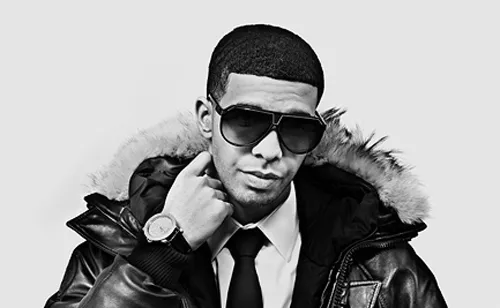
Tonight at midnight, Drake didn't drop an album. He dropped three. Iceman. Habibti. Maid of Honor. Forty-three songs across three full projects, with features from Future, 21 Savage, Central Cee, Sexyy Red, PartyNextDoor, Popcaan, and a list of newer names (Molly Santana, Loe Shimmy, Stunna Sandy) that most people will know by Monday. It's the biggest single release move in hip-hop in years. And if you grew up on rap the way I did, this isn't an album rollout. This is Drake trying to put the genre back on his back at a moment when nobody else is doing it.
He's not trying to save himself. He already won. He's trying to save the rest of us.
The millennial argument I keep trying to make
If you're a millennial like me (and yes, I've been "unc" for about thirteen years now), you grew up at one of the strangest crossover points in music history. We caught the tail end of lyrically profound 90s hip-hop just old enough to actually appreciate it. We had the full run of the 2000s with Lupe, Eminem, Dre, Jay-Z, and of course 50. We sat through the TI and Jeezy phase (shoutout the short-lived Yung Joc run). We had the hitmaker Nelly. We had Chamillionaire, who quietly is one of my all-time favorites.
We watched the world flip from analog to digital and we adapted in real time. We lived through gangster rap becoming optional in hip-hop instead of mandatory. And in that exact moment, we got Drake.
Drake was the first guy who showed up like a fully unlocked character. He could rap. He could sing (let's not even open that conversation today). He could be vulnerable and untouchable in the same song. That was new. Eminem wanted to murder everyone on every track (reminder that he is still a goat). Jay was always cool, even when he was trying to cry but couldn't. Drake could just sit in the full human experience and put it on a record, on the biggest stage, with a Wayne cosign carrying him in.
That's why we connected. He could talk about feelings the way we were already talking about them in the group chat, while still sounding like the biggest rapper in the world. He saw a guy like B.o.B and said okay, I can sing differently and rap differently while connecting to a tech-literate audience. I remember him going live on Twitter in 2010, just doing random stuff, giving Wiz Khalifa a shoutout in real time. I was gassed. The biggest artist in the genre was suddenly accessible in a way none of the giants before him would have been.
Two places at once
There's a whole other layer to why Drake worked for our generation that we don't talk about enough. He's biracial. Black father, Jewish mother, raised in Toronto, which is its own thing entirely. He didn't fit one box and he didn't try to.
For a lot of rappers, being from two places at once has been a hindrance instead of an asset. Look at Logic, who is genuinely one of the best alive and who has spent his entire career fighting battles about whether he was Black enough, white enough, real enough. Brilliant lyricist, technical wizard, classic albums, and the conversation kept circling back to his identity instead of the music. The mixed identity tax in hip-hop has been real for a long time.
Drake sidestepped it. He acknowledged it, sang about it, was honest about his mom, his dad, his hometown, his Hebrew school, his Toronto, and instead of letting that become the conversation, he made it the texture of the work. The same way he could rap and sing, he could move between cultural spaces without asking permission first.
We talked about this exact dynamic on the AwJiz Boys with Omar (O.Wavey), who is half Black and half Afghan and has spent his life dealing with not feeling fully claimed by either community. He called his album Girl Problems, but the whole project is sitting on a different problem underneath the title. It's the identity work it takes to figure out who you are when neither side opens the door all the way.
What Omar talked about on that episode, and what Logic has dealt with publicly for years, is the version of mixed identity that becomes a hindrance. The version where neither side claims you and you have to do double the work just to be in the room. Drake is the rare example of somebody who flipped that into an asset. He stopped asking permission to belong to either side, made the music he was going to make anyway, and the world met him in the middle.
That's also why Omar's catalog matters and why we want more people listening to it. Hip-hop has been quietly running on mixed identity for two decades. The artists who figure out how to use it instead of fight it tend to be the ones who move something forward. Pull up Omar's discography. Spend ten minutes with it.
Stream it. Tell a friend. The story Drake is sitting on top of right now is one a lot more people have lived than the discourse gives them credit for.
The Drake Effect was always an A&R move, not a feature move
Here's what people forget. Before Drake, the last rapper with this level of vertical growth in this small a window was 50 Cent. And 50 famously wouldn't dilute his brand with features. He didn't care to bring anyone up. Jay-Z sandwiched himself between talent, same with Diddy, same with Kanye. Drake took that playbook and pushed it ten years further.
He turned into a working A&R operation hiding inside a global pop star. He didn't just guest on tracks, he scaled people. He pulled them on tour, put them on his albums, and let his platform do the rest. The list is real and you can hear it for yourself.
Sampha (one of the most respected voices in alt R&B today, a Toronto-side cosign well before the Mercury Prize):
The Weeknd (Drake put him on Take Care before the world knew what an XO was):
Migos (the Versace remix did what one mention from Drake can do for an entire career):
iLoveMakonnen (Tuesday went platinum on the strength of one verse):
Yung Bleu (You're Mines Still was a quiet flip of his entire trajectory):
4batz (act ii: date @ 8 was a TikTok loop until Drake jumped on the remix and turned it into a national moment):
2 Chainz (No Lie was a complete reintroduction for a guy who had been around for years):
Add Giveon (Chicago Freestyle), PartyNextDoor (basically every project), Popcaan, Roy Woods, BlocBoy JB, and a dozen more I'm not naming for word count, and you start to see what the Drake Effect actually is. It's not a feature. It's a draft pick. He has the taste of a label head and the platform of a stadium artist, and he's been deploying both at the same time since 2010.
And then 2024 happened
Here's the part that still bothers me.
The same people Drake literally put on tour, cosigned on records, and pulled into the spotlight started calling him a culture vulture. The narrative shifted overnight. He became the villain in his own story, and the genre he carried for fifteen years decided he was the problem.
So Kendrick stepped up, and Drake said cool, show me what you got. He effectively said, alright, chill, hip-hop is yours.
What happened next?
Kendrick got his Grammys. He gave his cousin a Grammy on stage. And then... that was kind of it. Hip-hop continued to fall out of the top 40. I genuinely cannot name a new rap act that broke nationally in the last two years. The genre stalled. The clubs stalled. Workout playlists stalled. We stopped getting bangers and started getting think pieces.
And while everyone was crowning Kendrick, Drake quietly kept being the most streamed rapper on Spotify almost every single month. He lost the top spot in one month (February 2026, briefly), and then the dust settled and he climbed right back. By the time we got into spring he was already past five billion streams on Spotify in 2026 alone, more than double the next closest rapper.
We covered the whole Drake vs Kendrick stretch on the AwJiz Boys at length. Here's what we had to say. Bottom line we kept landing on: we love all music, but Drake is first by far.
Maintenance has always been his real superpower. Kendrick said "you suck" and we all agreed because it sounded good in the moment. Drake kept showing up anyway and dropped Push Ups, which is a banger we collectively pretended didn't exist because the industry needed a different narrative to land.
Are we the problem?
Real question. Is Drake the millennial Michael Jackson and we just refuse to acknowledge him?
Some folks who have never won at this level can't fathom what it takes to maintain. Getting to the top once is hard. Staying there for fifteen years while the algorithm, the discourse, your own peers, and an entire industry rotate underneath you is something else entirely. We treat it like it's expected because Drake made it look easy. It isn't easy. It's the hardest thing in this genre and he's the only one currently doing it.
(Quick side note because somebody is going to bring it up. Drake dates everyone, mostly older, mostly mature women, and we still find a way to call him inappropriate around younger women. For an industry that worships youth above almost anything else, the guy has consistently championed grown women his entire career. The narrative does not match the receipts. Even mine, to be honest.)
Why Iceman matters right now
Tonight's release isn't a comeback. He never left. It's something more interesting than that.
The Iceman rollout was one of the most elaborate album campaigns I've seen in my entire career working in music and marketing. Multiple livestream episodes. A twenty-five foot ice sculpture in downtown Toronto with the release date frozen inside it. A Marvel collab tied to the original Iceman character. A trail of clues spanning months. He treated this drop like an event, the way the genre used to treat drops. Remember when an album release was actually a moment? He is single-handedly trying to bring that back.
And then he triple dropped it. Press play on all three below.
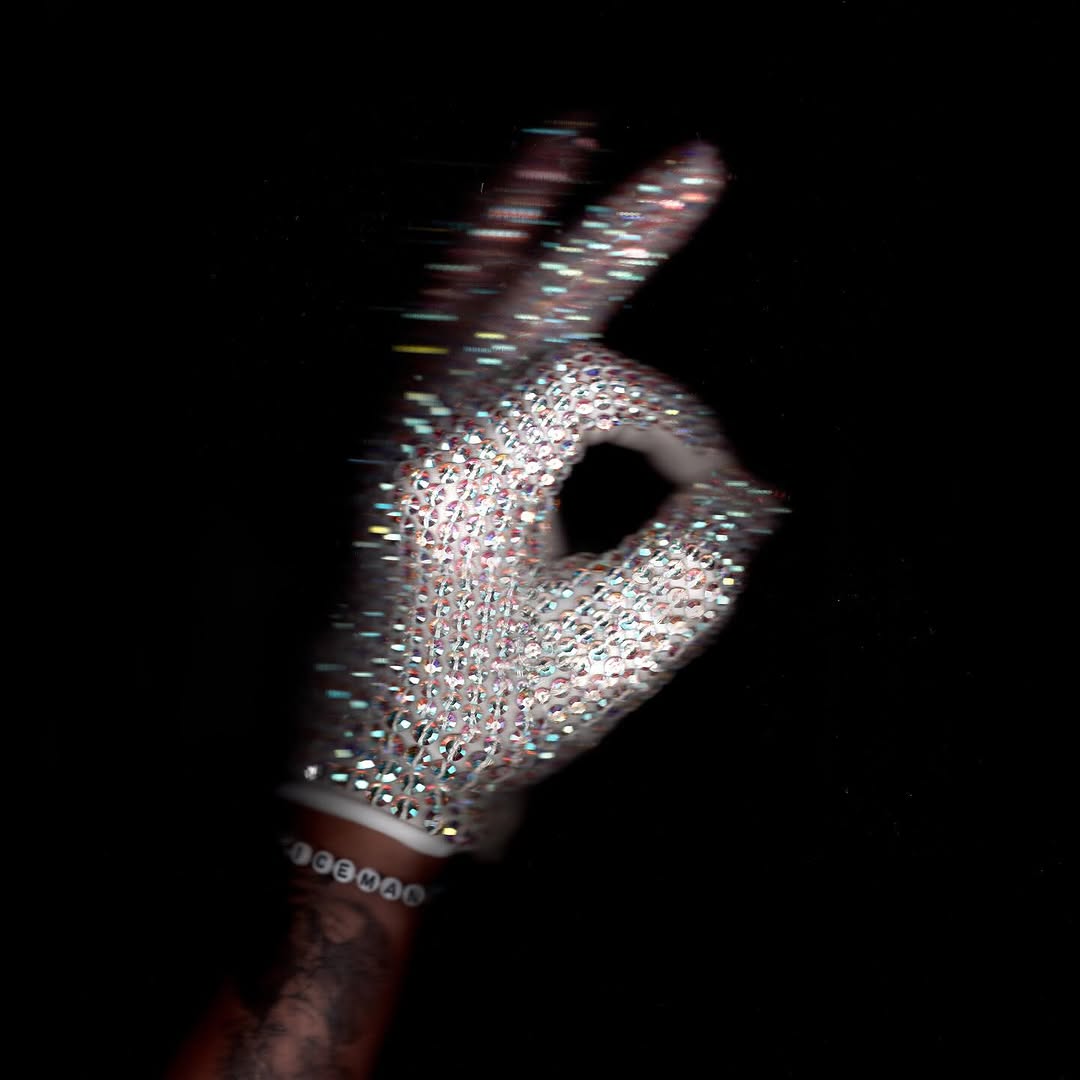
Iceman (eighteen tracks, the main thesis, opening with the What Did I Miss declaration that set the whole rollout in motion):
Habibti (eleven tracks, the soft side, the Arabic term of endearment carrying the whole concept):
Maid of Honor (fourteen tracks, the wildcard, led by the Central Cee link-up and full of Popcaan, Sexyy Red, and Iconic Savvy guest slots):
Forty-three songs in one night, three years after his last solo album, in a year where he was already running away with streaming numbers without trying. That isn't ego. That's somebody saying, if I don't do it, nobody will.
What we actually want
Strip away the discourse and ask yourself what you actually want from hip-hop right now.
You want bangers. You want hits. You want a song to work out to. You want bops in the club. You want a heartbreak record to feel sad to (preferably from a guy with a ten-inch ego). You want the genre to be fun and immediate and culturally on again.
That's the assignment. Drake has been the most consistent supplier of all four of those for over fifteen years. If you think this is glazing, my guy, grow up. It's not glazing when you're just showing respect for the work.
Iceman, Habibti, and Maid of Honor land tonight into a hip-hop landscape that genuinely needs them. Not because Drake needs the win. He doesn't. The win has been compounding in his streaming numbers, his tour gross, his label, and his roster for the last decade. The genre needs the win. The clubs need the win. The kids who are about to discover rap for the first time need a reason to care.
I hope it lands. For everyone's sake. Not just his.
Let's go.
Next in Archive
.svg)